20 Years After Hurricane Katrina: What Went Wrong—And How We’re Building Something Better
Twenty years ago, Hurricane Katrina struck the Gulf Coast.
It remains one of the most devastating natural disasters in American history—not just because of the power of the storm, but because of how deeply the systems we depended on failed us. For many, the storm wasn’t the only threat—it was the absence of help, support, and protection.
As we mark this solemn anniversary, we reflect not only on what went wrong, but also on how far we’ve come. We remember the lives lost, the communities displaced, and the families forever changed. And we recommit ourselves to building a future where no one is left behind—especially not the elderly, the disabled, or low-income individuals.
What Went Wrong
When Hurricane Katrina made landfall on August 29, 2005, it brought Category 4 winds, a storm surge up to 28 feet, and the catastrophic failure of levees meant to protect New Orleans. Over 80% of the city flooded. Collectively, there was over $200 billion in economic damages across the golf coast, over 1,380 lives lost and hundreds of thousands of residents left displaced or homeless. But while the storm itself was catastrophic, the true tragedy was our collective lack of preparedness—especially for those who couldn’t help themselves.
A Timeline of Katrina’s Landfall
- First Landfall in Florida (August 25, 2005)
Katrina first struck the Florida peninsula as a Category 1 hurricane, bringing heavy rains, flooding, and initial damage. - Second Landfall in Louisiana (August 29, 2005)
After strengthening over the warm waters of the Gulf of Mexico, Katrina slammed into Buras, Louisiana, as a Category 3 hurricane, unleashing destructive winds and storm surge. - Third Landfall near Louisiana/Mississippi Border (August 29, 2005)
Katrina crossed into St. Bernard Parish before making its final landfall near the Louisiana-Mississippi border, devastating coastal communities across both states.
The Impact Across the Gulf Coast
- The City of New Orleans did not have an actionable plan for a catastrophe of this scale.
- The mayor issued a mandatory evacuation only hours before landfall, far too late for many to act.
- Floodwaters rose from the ground to rooftops in just minutes after the levees broke around 7 a.m.
- Protective marshlands had been eroded over decades, removing the natural barrier between the Gulf and the city.
- Over 100,000 residents, many of them elderly, disabled, or low-income, were stranded—left to shelter in the Superdome or in their homes, without access to transportation or emergency assistance.
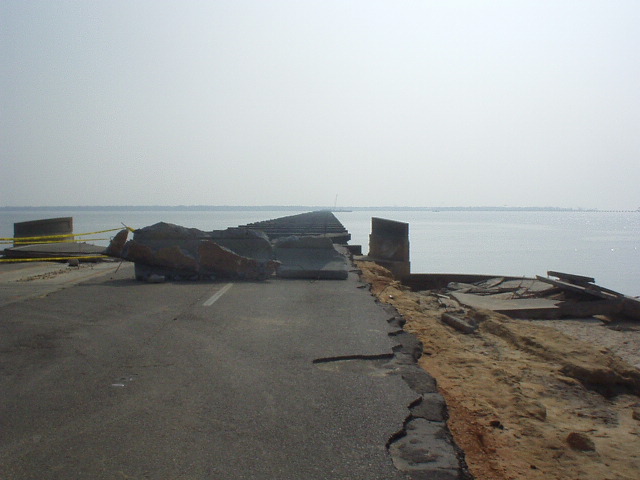
But Louisiana was not alone in its devastation. Coastal Mississippi was equally ravaged. Katrina’s eye made its final landfall in Hancock County, bringing total devastation to Waveland, Bay St. Louis, Pearlington, Pass Christian, and southern Diamondhead.
The destruction was staggering:
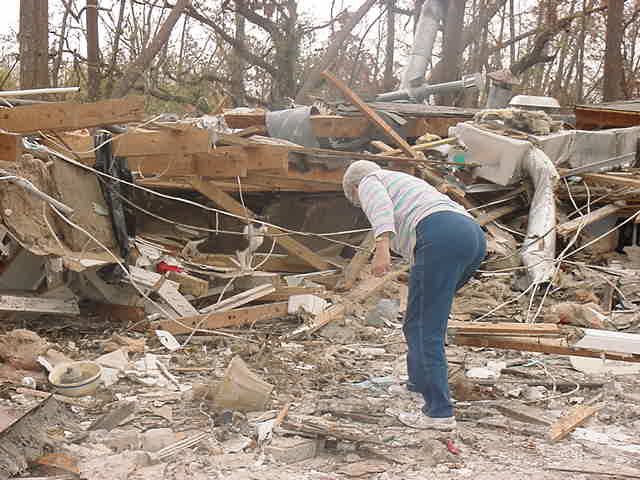
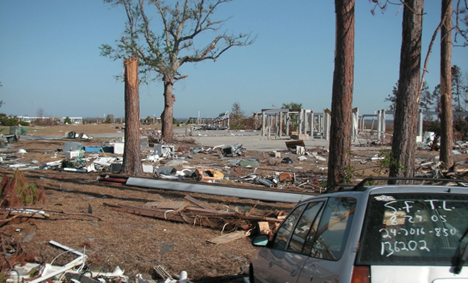
- A 30-foot tide first inundated low-lying areas like Kiln and Diamondhead, followed by a 27-foot storm surge moving at 15 mph—like a bulldozer of water. On Diamondhead’s south side, 250 homes were wiped out in minutes. North of I-10, 460 more homes flooded.
- Surge waters reached 12 miles inland, with a recorded 27.8-foot high-water mark in Pass Christian. The Bay St. Louis–Pass Christian bridge was completely obliterated.
- In Mississippi alone, 228 lives were lost. Millions of trees were uprooted, power was wiped out across the state, and all 82 counties were declared disaster areas. More. than half a million Mississippians required FEMA assistance, underscoring the scale of displacement and recovery challenges that continue to echo even decades later.
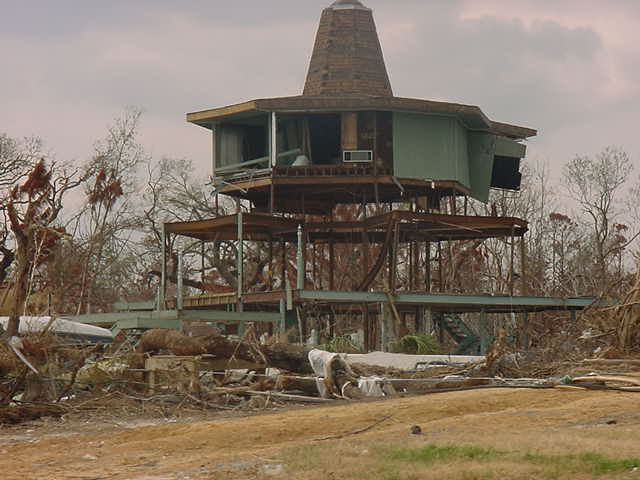
Katrina devastated everyone it touched. Families across the Gulf lost homes, livelihoods, and loved ones. But it didn’t impact everyone equally. For the elderly, disabled, and low-income residents of New Orleans and South Mississippi—those without cars, money, or mobility—there was no help coming. No evacuation plan. No contingency for their survival. They were left to face a deadly storm completely alone.
That’s where the system broke—and where the deepest human cost was paid.
At Ground Force Humanitarian Aid, this is the wound we were created to address. We don’t exist to tweak broken systems. We exist to rebuild them—from the ground up—with equity, dignity, and action at the center.
How Far We’ve Come: A New Era in Disaster Response
Twenty years later, we’re in a different world. The scale of storms is larger—and so is our capacity to respond — but only if we use the right tools and put people, not process, at the heart of disaster response.
Here’s how technology, strategy, and community mobilization have changed the game—and how GFHA is helping lead the way.
1. Technology Now Enables Faster, Smarter Responses
In 2005, we didn’t have smartphones or social media the way we do today. Most people relied on television news or radio to understand what was happening. There were no live tweets, no push alerts, no real-time coordination.
The stories from the ground—people stranded on rooftops, families begging for rescue, shelters in crisis—were often hidden from the public for days, if they surfaced at all.
Today, that’s no longer the case.
With smartphones in nearly every hand and platforms like Stability.org available to coordinate response, information can now move faster than the storm itself. Communities can upload needs, volunteers can track supply routes, and partners can make real-time decisions based on accurate data. GFHA’s Data-Driven Remote Team uses these tools to direct aid and volunteers with precision, speed, and purpose.
Technology isn’t just helping us respond faster—it’s helping us respond smarter.
Take a look at the table below that outlines the technological advances we can use now, versus what we had 20 years ago when Katrina hit.
| 📊Timeline Graphic: Disaster Communication & Technology – Then Vs. Now | ||
|---|---|---|
| Category | 2005 (Hurricane Katrina) | 2025 (Today) |
| Mobile Phones | Basic flip phones; limited texting and no GPS In 2005, texting was still new, making it difficult for some people to rely on it for communication | Smartphones with GPS, high-speed data, emergency alerts |
| Social Media | Facebook (college-only), no Twitter, no Instagram | Real-time info via Facebook, X, Instagram, Threads, TikTok |
| Live Video | TV broadcasts only, when the power went out, people had no way of getting news or storm updates. | Instant livestreaming from phones—raw, unfiltered, immediate |
| Communication Tools | Radio, landlines, TV stations | Group messaging, push notifications, satellite internet |
| Data Sharing | Paper forms, whiteboards, manual coordination | Shared digital maps, databases, real-time dashboards |
| Volunteer Coordination | Word-of-mouth, church bulletins, phone trees | Apps, geolocation tools, platforms like Stability.org |
| Crisis Visibility | Delayed media coverage, filtered footage | Global awareness within minutes via viral video and social posts |
| Public Alerts | Emergency sirens, news scrolls | Wireless Emergency Alerts, custom location-based warnings |
| Aid Matching | General donation appeals | Targeted giving: direct-to-family, direct-to-need |
2. SAFE Camps: Relief Arrives With the People Who Need It
After Katrina, tens of thousands of people were crammed into the Superdome—many without food, medicine, or adequate sanitation. That trauma is still fresh for many.
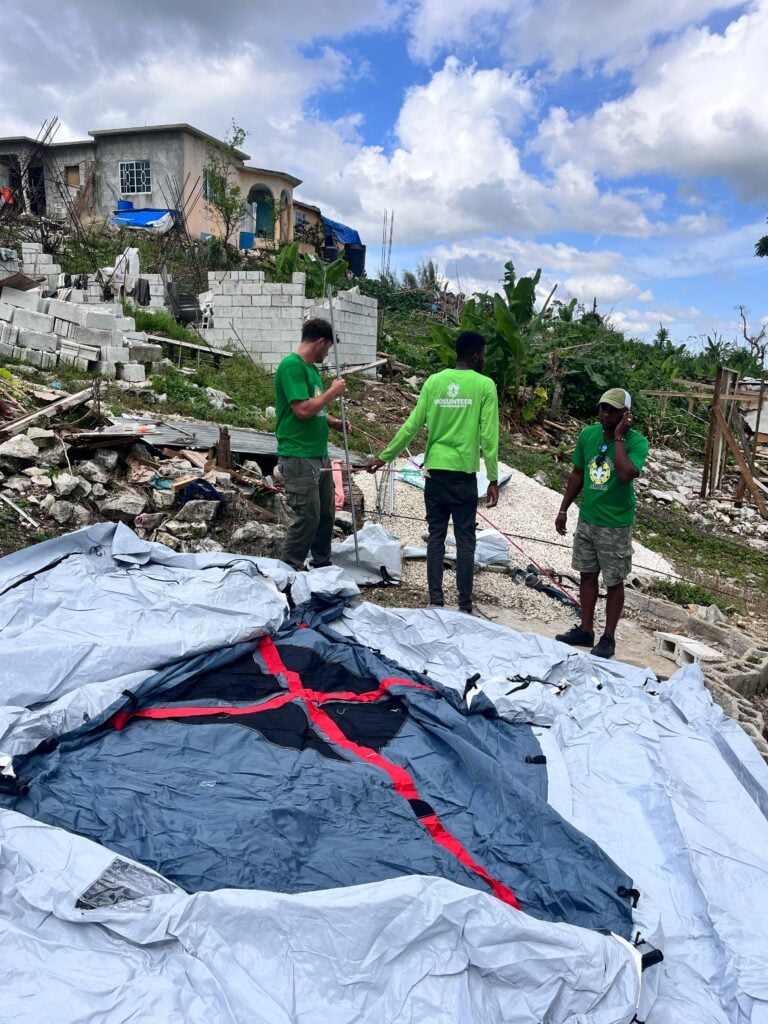
Our SAFE Camp (Swift Action Force Emergency Camp) program is designed to prevent that kind of humanitarian breakdown. We deploy mobile, fully-equipped camps within hours of impact, offering essential services: hot meals, clean water, charging stations, internet access, medical care, and shelter.
These camps act as command centers, connection points, and dignified spaces for survivors—especially for those who can’t just “get out” or “go stay somewhere else.”
3. Prioritizing the People Most Likely to Be Left Behind
Katrina proved that if you’re elderly, disabled, or low-income in America, you are more likely to be overlooked in a disaster.
At GFHA, we don’t just acknowledge that—we design our response around it.
Through our Community Caretaking program, we send trained volunteers directly into homes and neighborhoods to assist individuals who cannot leave their homes, stand in supply lines, or access online resources. Whether it’s delivering oxygen tanks, providing hot meals, or simply checking in, this program ensures that no one falls through the cracks.
4. Storytelling is Now a Lifeline, Not a Luxury
In 2005, what the world saw of Katrina was filtered through television anchors and delayed footage. Today, Visual Storytelling allows us to share raw, real-time moments straight from the ground. These stories not only keep attention on unfolding disasters, they help raise funds, mobilize volunteers, and hold systems accountable.
At GFHA, we use social media to keep the story alive long after the news cycle moves on, because recovery doesn’t end when the cameras leave.
5. Volunteers Are Trained and Ready Before the Storm Hits
After Katrina, thousands wanted to help—but most didn’t know how. That created chaos, duplication, and sometimes more harm than good.
Today, our Swift Intervention Training ensures that volunteers are trained, organized, and ready to respond before disaster strikes. From local church groups to skilled professionals, we equip teams to act fast, act safely, and act with purpose.
Preparedness is Protection
Twenty years ago, Hurricane Katrina changed our nation forever. It showed us how vulnerable we really were—and how broken our systems were when it came to protecting those most at risk.
But it also ignited a movement. A refusal to accept “too late” as the standard. And a generation of responders, organizers, and survivors who knew we could do better.
At Ground Force Humanitarian Aid, we’re part of that movement. We’re not just rebuilding homes—we’re rebuilding trust, coordination, and humanity in disaster response.
Because the next storm will come. The question is: Will we be ready for it—for everyone?
Join Us
📍 Learn more about our work at groundforce.ngo
📡 Explore coordination tools at Stability.org
🤝 Partner with us, volunteer, or donate to make your impact count